
 Spanish
 English
 Portuguese
 Chinese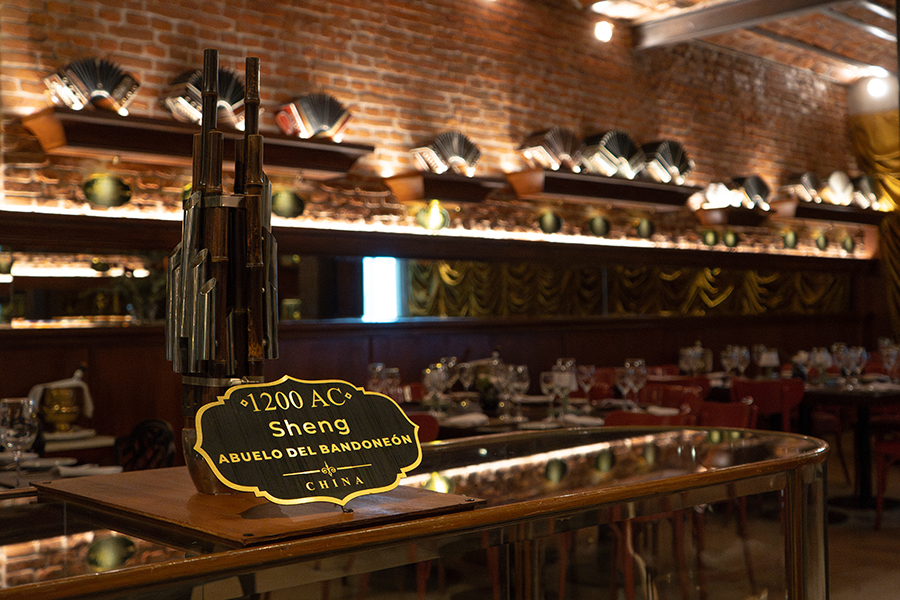
A journey through time into the soul of tango
History of the Bandoneon
1880 — 2026
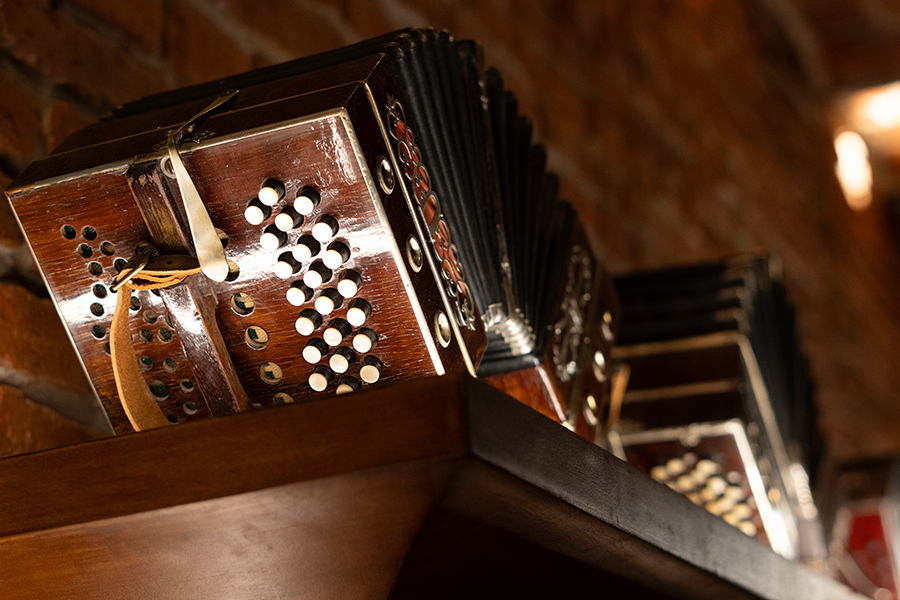
Milonga Julié presents a one-of-a-kind exhibition: the historic collection of bandoneons and concertinas belonging to "Familia Tango Show". The exhibition offers a journey through time across the different models, materials, origins and manufacturing eras of this emblematic instrument, tracing its technical and aesthetic evolution from 1880 to the present day.
Years of history
Tones in a single instrument
Co-created bandoneons
Pieces on display
Origins and Technical Features
The exhibition focuses mainly on German production between the late 19th and mid-20th centuries, highlighting:
Provenance: Historic instruments manufactured in Chemnitz (Saxony) and other prominent German regions.
Variety: Models ranging from 40 to 156 tones.
Materials: Pieces built from fine woods such as walnut, pine and rosewood.
Authenticity: Several pieces still preserve their original free-reed systems intact.
Legendary Brands and Makers
The collection brings together the most important and respected names in historic instrument craftsmanship:
- Alfred Arnold (AA) and Ernest Louis Arnold (ELA)
- Uhlig & Lange
- Josef Rauscher and Stark
Gems and Rarities of the Collection
Among the most exotic and rarely seen pieces in the world, three examples stand out:
-
01
Automatic "Tanzbar" concertina (c. 1900): A mechanical system that works with music rolls.
-
02
The "Sheng": An ancient Chinese wind instrument, regarded by history as the direct precursor of the bandoneon.
-
03
"Rhine System" models: Fundamental variants representing the earliest design developments of the instrument.
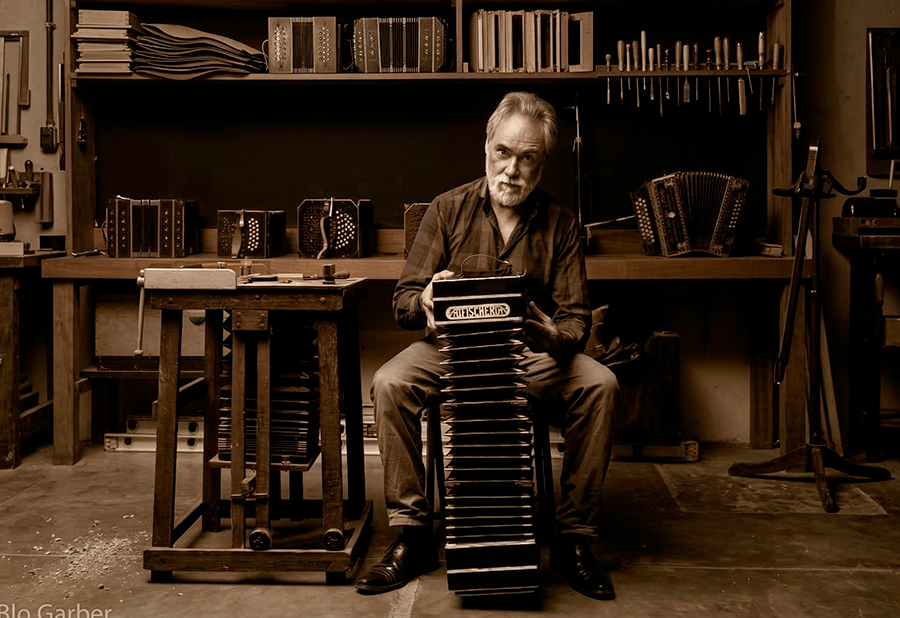
Oscar Ficher, luthier born in Buenos Aires in 1966.
- Founder of La Casa del Bandoneón and of the world's first school specialized in bandoneon lutherie.
- Restorer since 1995 and leading advocate of the Bandoneon Cultural Heritage Law (Law 26,531).
- Co-creator of more than 300 bandoneons since 2013 together with Nahuel Aguirre.
- Author of the book Construction and Deconstruction of the Bandoneon.
- Creator of the Museum of the Bandoneon and the Free-Reed Instrument.
Timeline of the Bandoneon and Concertina Exhibition
The starting point of this story is in Asia. The Chinese sheng is considered one of the great ancestors of this entire family of instruments.
-
1840
Sheng – China
-
1850
Rhine System Bandoneon – 76 tones – Germany
-
1890
Rhine System Bandoneon – 106 tones – Germany
-
1890
C.F. Uhlig & E. Lange Concertina – 76 tones – Germany
-
1900
Automatic concertina with music rolls – Germany
-
1902
Rhine System Bandoneon – 102 tones – Germany
-
1910
Uhlig Concertina – 76 tones – Germany
-
1910
DRCM Concertina – 94 tones – Germany
-
1920
DRCM Concertina – 88 tones – Germany
-
1920
English concertina – 40 tones – Germany
-
1922
GFC Bandonica – 20 tones – Germany
-
1925
Concertina – 94 tones – Germany
-
1926
Bandonica – Germany
-
1927
Ernest Louis Arnold Concertina – 102 tones – Germany
-
1930
Josef Rauscher Bandoneon – 156 tones – Germany
-
1930
Stark Concertina – 104 tones – Germany
-
1948
Einheit Bandoneon – 144 tones – Germany
-
1959
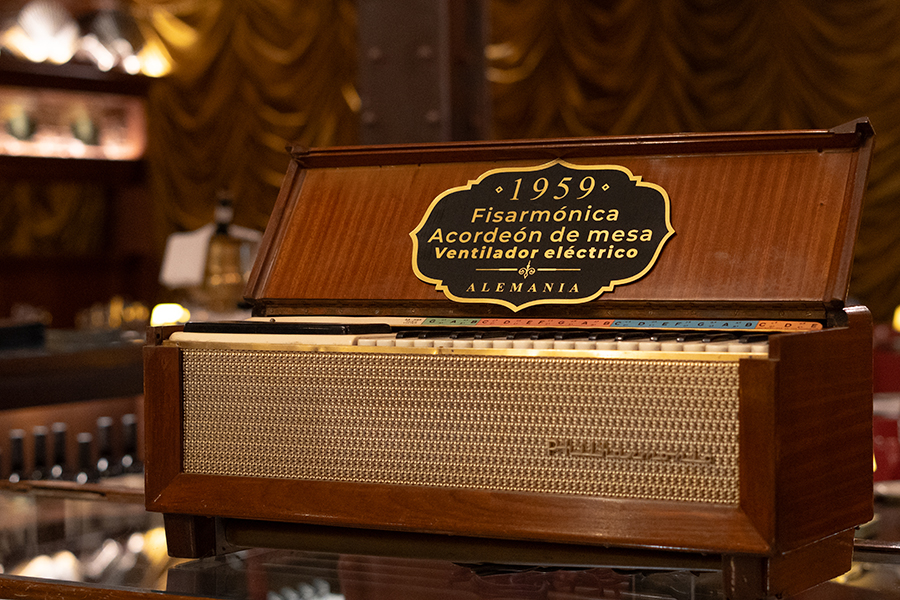
Fisarmonica / Table accordion with electric fan
This exhibition spans more than a century of musical evolution: from the Chinese Sheng to the bandoneons that gave rise to the soul of tango in Buenos Aires.
It is not just a collection of instruments: it is the journey that transformed a European invention into the voice of Argentine tango.